The Lab & Mission
Equipping Creative Leaders to Architect Resilient Cultural Ecosystems

What is Culture Futures Lab?

Mission
By bridging cultural insights with participatory innovation, we mobilize global experts and local communities to co-create inclusive futures where technology sparks the artistic spirit and empowers humanity.

Vision
A world where cultural roots, technological innovation, and shared imagination converge to ignite collective action, shaping public spaces and catalyzing tomorrow's societies.

Why Culture Futures Lab?
We sit at the unique intersection of cultural heritage, participatory design, and forward-looking technology. Traditional institutions often preserve culture as a static artifact of the past. We treat culture as a living, dynamic tool for future prototyping. By shifting from passive observation to active co-creation, we turn historical insights into tangible, real-world solutions for tomorrow's social challenges.

Bringing Communities & Creators
We are built for grassroots neighborhoods, engaging local cultural practitioners, and creative changemakers who want a direct say in how their stories and public spaces evolve. Through our site-specific incubators, we provide a collaborative platform where everyday citizens work side-by-side with international futurists, breaking down barriers to transform local environments together.

Bridging Research & Industry
We serve as a vital bridge between academic scholars and industry partners from museums to civic organizations to tech start ups, seeking innovative ways to engage diverse publics. Whether you are looking to redefine public spaces, foster cross-cultural dialogue, or generate new heritage knowledge through immersive technologies, we provide the global network and tailored frameworks to make it happen.
Culture Futures Pillars
Drawing on global case studies from the dynamic cultural landscapes of East Asia, the Lab investigates how new technologies and innovative approaches can transcend surveillance-oriented cultural management models to foster genuine democratic and creative engagement. We address critical challenges such as algorithmic bias, data sovereignty, and the "disconnected intelligence" of institutional silos. Our mission is to transform cultural governance from a reactive process into an anticipatory and participatory practice, empowering communities to become active stewards of their cultural futures. Our methodology is built upon three interconnected pillars that guide all our research, workshops, and prototyping activities.

Future Building Through Innovation
We move beyond simply forecasting trends to actively building better futures. This pillar focuses on harnessing cutting-edge technologies, including Artificial Intelligence (AI), virtual and augmented reality (VR/AR) and predictive modeling to anticipate risks and identify opportunities for the creative economy. We explore how technological advancements can inform strategic decision-making, from modeling audience trends and climate threats to heritage sites to understanding AI's impact on creative labor. Our approach is not about technocratic determinism, but about using technology as a lens to create evidence-based, forward-thinking cultural strategies that are ethical, resilient and sustainable.

Participatory Futuring
The future of culture is too important to be left to algorithms or institutions alone. This pillar is dedicated to democratizing the process of imagining what comes next. We employ methods of "participatory futuring" to engage diverse communities in envisioning and shaping their cultural landscapes. Through workshops, co-design sessions, and community outreach activities we challenge top-down planning and incorporate a multitude of voices, epistemologies, and cultural values. This ensures that the futures we build are equitable, inclusive, and reflect the true diversity of human experience, resisting the exclusionary biases often embedded in technological systems.

Speculative Prototyping
To make alternative futures tangible, we use speculative design and experiential futures. This involves creating physical prototypes, immersive installations, and design fictions that materialize possible cultural scenarios. We develop experiential probes and tangible scenarios that allow communities to interact with, critique, and re-imagine the underlying systems and values of potential governance models. These prototypes are not blueprints, but provocations—tools for critical reflection and public dialogue that make abstract possibilities concrete, fostering a deeper "futures literacy" and enabling more informed choices today.
Research & Activities
The Culture Futures Lab is a dynamic space for investigation and experimentation. Our research activities are interdisciplinary, blending critical policy analysis with hands-on, design-led innovation.
Through this combination of experimental research, practical toolkits, and public engagement, the Culture Futures Lab serves as a vital platform for shaping the inclusive, democratic, and resilient cultural ecosystems of tomorrow.
Cultural Data Governance & Policy
Developing next-generation frameworks for the ethical and effective management of cultural data. Our focus is on creating participatory models that empower communities and enhance public value, moving beyond institutional data silos.
AI Ethics & Equity in the Cultural Sector
Critically examining the application of artificial intelligence across museums, archives, and creative industries. We investigate algorithmic bias, transparency, and data rights to build equitable and accountable technological systems.
Cultural Ecologies & Urban Placemaking
Exploring the role of art, heritage, and digital technology in shaping the future of public space. We use speculative methods to envision how cities can foster resilient, inclusive, and vibrant cultural districts.
Digital Cultural Heritage & Access
Researching the impact of digital reproduction—from 3D modeling to virtual environments—on the preservation, interpretation, and democratization of cultural heritage. We address evolving questions of authenticity, narrative authority, and digital ownership.
Cultural Analytics & Transnational Flows
Employing data visualization and computational methods to map and analyze the global circulation of culture. This research identifies emerging trends, models their impact, and informs strategic decision-making for cultural institutions and policymakers.
Creative Practice & Technological Mediation
Investigating the transformative impact of new technologies on artistic and curatorial work. A key focus is the evolving nature of collaboration between human and artificial intelligence, addressing critical issues of authorship, creative agency, and valuation.
Research Team
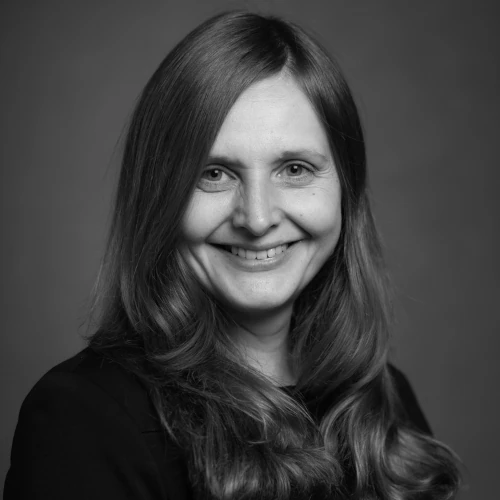
Lab Leader
Associate Professor Natalia Grincheva is a leading Digital Humanities scholar and practitioner who specializes in data-driven cultural policy and diplomacy. Her work actively shapes the emerging field of digital statecraft, bridging the gap between cultural insight and data-driven governance. Her career spans from foundational work on the UNESCO's 2005 Convention to pioneering the Data To Power platform, developed for academic inductive research to facilitate the exploration of complex global phenomena through data visualization, mapping, and interactive data storytelling. She is the author of three monographs Geopolitics of Digital Heritage (Cambridge University Press: 2024), Museum Diplomacy in the Digital Age (Routledge: 2020) and Global Trends in Museum Diplomacy (Routledge: 2019). Now she is working on a new monograph, Digital Soft Power of Heritage Media, forthcoming with Cambridge University Press.

