Research & Foresight
Interrogating Cultural Paradigms Through Speculative & Critical Inquiry

Data for Culture | 2030:
Designing an Open-Source, Proxy-Driven, AI-assisted Data Model for the UNESCO's SDG Cultural Indicators Framework

This project aims to transform how the United Nations' Sustainable Development Goals (SDGs) capture the impact of culture. While culture is recognized as a vital driver of global sustainability, tracking its impact has been historically hindered by massive data fragmentation, regional resource constraints, and a critical "data vacuum" in the Global South. Current frameworks rely heavily on operationally demanding, qualitative reports that strain national capacities. To resolve this, the project is developing an alternative, lightweight data model for the UNESCO Culture | 2030 Indicators Framework. Rather than demanding primary data collection from Member States, this model relies entirely on open-source, publicly accessible global datasets. The project focuses on creating an interactive, global mapping and monitoring system. Through multi-layered GIS mapping, diverse non-traditional proxy indicators—ranging from environmental satellite data to labor statistics—will be visualized globally to intelligently estimate cultural vitality and fill structural information gaps. Tested across a diverse comparative framework in the Asia-Pacific region, this prototype will provide an accessible tool for policymakers, proving that culture's contribution to global sustainability can be systematically monitored, visualized, and actioned worldwide.
Principle Investigator: Associate Professor Natalia Grincheva
Archiving Digital Folklore:
AI-Driven Preservation and Generative Storytelling in Participatory VR Heritage
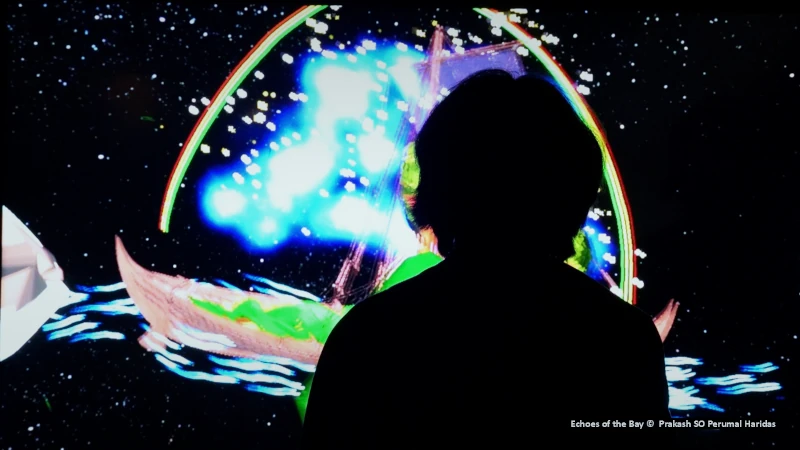
This research project investigates the development of an innovative, AI-enabled dynamic archive designed to preserve and reimagine born-digital VR artifacts and community folklore. Rooted in the unique preservation challenges highlighted by the "Echoes of the Bay" VR project—a participatory virtual reality experience created for Singapore's 60th Independence anniversary—this study addresses a critical gap for community-centric virtual creations that fall outside the scope of state mandates and commercial platforms. Because the transient nature of VR co-play and rapid software obsolescence threaten these grassroots histories, this project designs a living repository rather than a static museum archive. It utilizes a situated AI framework for automated artifact classification and integrates a generative storytelling engine, allowing contemporary users to actively rearrange and transform digital folklore pieces into novel narratives. Ultimately, the project offers a scalable model for safeguarding vulnerable, community-driven virtual heritage, ensuring transient digital echoes of cultural identity remain vital and accessible.
Principle Investigator: Associate Professor Natalia Grincheva

