People & Network
Scholars, Practitioners & Visionaries Shaping Digital Statecraft

Core Team

Natalia Grincheva
Lab Leader
Natalia Grincheva
Associate Professor Natalia Grincheva is a leading Digital Humanities scholar and practitioner who specializes in data-driven cultural policy and diplomacy. Her work actively shapes the emerging field of digital statecraft, bridging the gap between cultural insight and data-driven governance. Her career spans from foundational work on the UNESCO's 2005 Convention to pioneering the Data To Power platform, developed for academic inductive research to facilitate the exploration of complex global phenomena through data visualization, mapping, and interactive data storytelling. She is the author of three monographs Geopolitics of Digital Heritage (Cambridge University Press: 2024), Museum Diplomacy in the Digital Age (Routledge: 2020) and Global Trends in Museum Diplomacy (Routledge: 2019). Now she is working on a new monograph, Digital Soft Power of Heritage Media, forthcoming with Cambridge University Press.
Benedict Yu
VR Artist
Benedict Yu
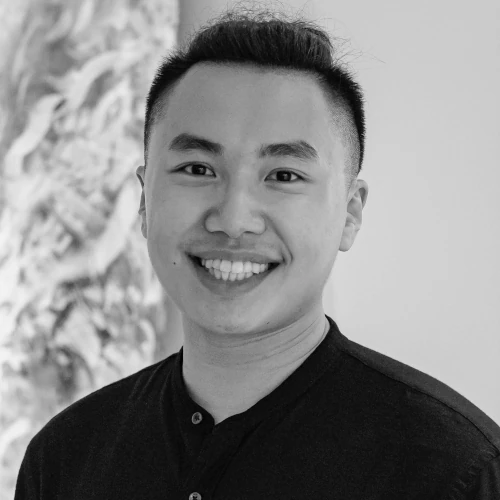
Benedict Yu is a Visceral Reality Artist, mixed reality educator, and affective reality researcher working at the intersection of art, technology, and spirituality. Based between Singapore, Taiwan, and the EU, he creates virtual sanctuaries and immersive spaces designed to foster communal healing and self-reflection, particularly for unseen and marginalized communities worldwide. Yu's artworks and projects are held in major collections such as Apple Developer Centre, Mapletree Investments Singapore, Mediacorp Singapore, the Courtois Collection (Paris), and GAW Capital (Hong Kong). His projects have been presented at renowned institutions and venues, including the New Arts Museum Singapore, Asian Civilisation Museum, SomoS Berlin, Zwölf Apostel Kirche Berlin, the Courtois Collection Paris, Marina Bay Sands, Gardens by the Bay, the National Museum of Singapore, the National Design Centre, Gillman Barracks, Gajah Gallery, and Fondazione Opera Campana dei Caduti.
Amber Chunzhi Yin
VR Coordinator
Amber Chunzhi Yin
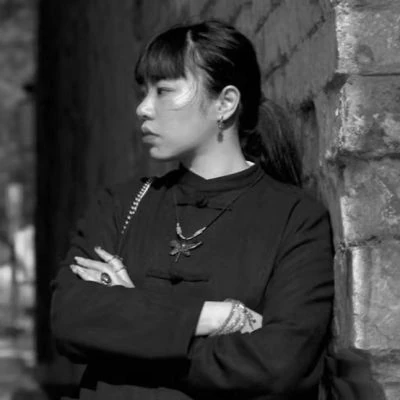
Dr Amber Chunzhi Yin is an interdisciplinary researcher and culture entrepreneur working at the intersection of cultural studies, digital humanities, and heritage preservation. She holds a PhD in Cultural Studies & Digital Humanities from Nanyang Technological University, and has a background in fine art. Her research focuses on cultural analysis, ethical approaches to generative AI in heritage contexts, and cross-cultural perspectives on cultural interpretation. Dr Yin has contributed to scholarly and applied work on responsible digital heritage practice, with a focus on developing rigorous, ethics-informed approaches for using AI and other computational methods in cultural contexts. Her publications and ongoing projects examine how cultural meaning is represented, transformed, and safeguarded when heritage is digitised, reconstructed, or interpreted through AI systems.
Contributors

Roslynn Ang
Dr Roslynn Ang is an educator and scholar in the intersections of Cultural Anthropology, East Asian Studies, Settler Colonial Studies, Media and Performance, and Critical Heritage Studies. She is in a long-term engagement with the Sapporo Upopo Hozonkai (札幌ウポポ保存会), an intangible cultural heritage performance group that focuses on revitalizing Indigenous Ainu song and dance in Japan. Her research interests include performance and media, decolonizing methodology, indigeneity, representations of race and nation, and Japan's global colonial history.She is currently a co-PI in an international research group for “Cross-border Action Heritage for Trans-Indigenous and Inter-islands Diplomacies in the Asian Pacific Rim” with a 3-year grant from the Korean National Commission for UNESCO (KNCU). Her publications have appeared in the International Journal of Cultural Policy, The Museum in Asia (Routledge), and Frontiers of Memory in the Asia-Pacific (HK University Press). She has lived and worked in Singapore, China, Japan, and the USA.
Rulin Chen
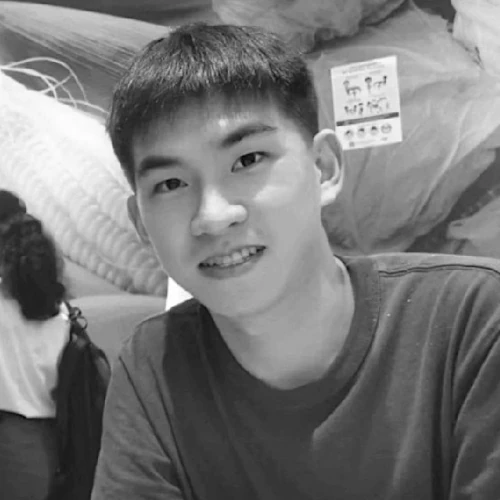
Dr Rulin Chen is currently an Assistant Professor at the School of Culture and Creativity, BNBU. Prior to joining BNBU, he was a postdoctoral researcher at the Computer Graphics Laboratory, Singapore University of Technology and Design, under the supervision of Prof. Peng Song, where he also received his doctoral degree in 2024. Prior to that, he earned his bachelor's degree from Shantou University in 2020, supervised by Prof. Chuliang Wei. During 2019 to 2020, he was a research intern at CUHKSZ under the supervision of Prof. Zhenglong Sun. His research lies at the unique intersection of computer graphics and physical art/design. His work has been published in top venues in computer graphics, including SIGGRAPH, TOG, and TVCG. His Ph.D. thesis was nominated to SUTD Best Ph.D. Thesis Award and he received the SIGGRAPH 2022 Best Paper Honorable Mention Award.

Mika Noh
Mika (Jaeyun) Noh is a cultural policy strategist and AI art specialist with a background spanning government, technology, and the arts. She is currently the Chair of the AI Art Forum (AIAF), where she leads international discourse on ethical AI, cultural infrastructure, and generative creativity. She has previously served as Legislative Director at the National Assembly of the Republic of Korea and the Ministry of Culture, Sports and Tourism on national cultural and digital governance policies. She has published widely, including in ENCATC Magazine, Harvard Art Law Organization, and Artsy, she writes on cultural policy and the global art market. Mika also directs digital strategy and institutional partnerships at Niio Art, a global media art platform, and is the founder of Space Ba, a curatorial studio advancing cross-sector collaborations across urban regeneration, public institutions, and media art. Holding a Master's degree in Arts Management from Korea National University of Arts and a Law degree from Ewha Womans University, she integrates creative leadership with legal and policy expertise to foster inclusive and innovation-driven cultural ecosystems.
Sheuo Hui Gan
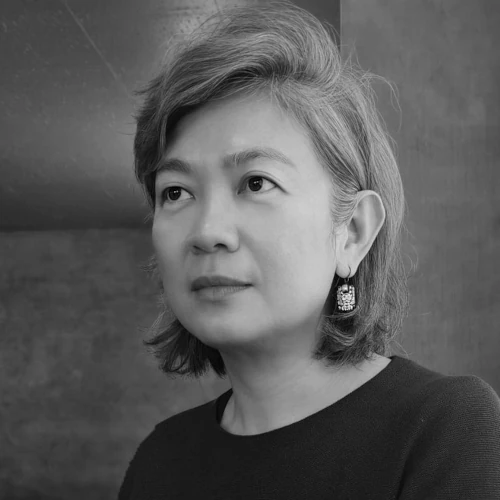
Dr Sheuo Hui Gan is a lecturer at LASALLE, University of the Arts Singapore (UAS). Her research focuses on animation, media aesthetics, and practice-based approaches to storytelling. Her publications include “Motion and Emotion in Anime” in The Cambridge Companion to Manga and Anime (2024), “Poetics of Selective Animation: Anime and the Concept of Limited Animation” (2023), “The Sound of Kimetsu no Yaiba Anime” (2022), and “Stimulating Thoughts Rather Than Appetite: On TAKAHATA Isao's Animation Aesthetics” (2020). Her latest work, “Re-sensing food culture in Singapore: Podcasting as practice-based research,” has been accepted for publication in Media International Australia. She curated A World is Born: Emerging Arts and Designs in 1980s Japanese Animation at DECK Singapore in 2018 and developed the UAS Common Curriculum IN-depth module. She is currently developing a children's book project on nature, adventure, and slow storytelling in Lapland.

Magnus Pfeffer
Professor Magnus Pfeffer is a Deputy Director of the Institute for Applied Artificial Intelligence at Stuttgart Media University, Germany. His research interests are knowledge organisation, large-scale data management and information retrieval. He is the co-originator of the "Japanese Visual Media Graph" project, that aims to collect information on all aspects of Japanese visual media, like Manga, Anime and Computer Games, the characters and the people related to the field. The information is organised in a way that makes it accessible for researchers to answer research questions using data-driven methods.

Zoltan Kacsuk
Dr Zoltan Kacsuk is Research Fellow at the Stuttgart Media University, Germany. He brings a unique blend of cultural studies honed theoretical sensitivities coupled with an extensive toolbox of methodological approaches to bear on the various research projects he is involved in. He has worked in many areas of the social sciences, humanities and arts and the intersections thereof with information technologies. For the past seven years he has been a key member of the Japanese Visual Media Graph project team.

